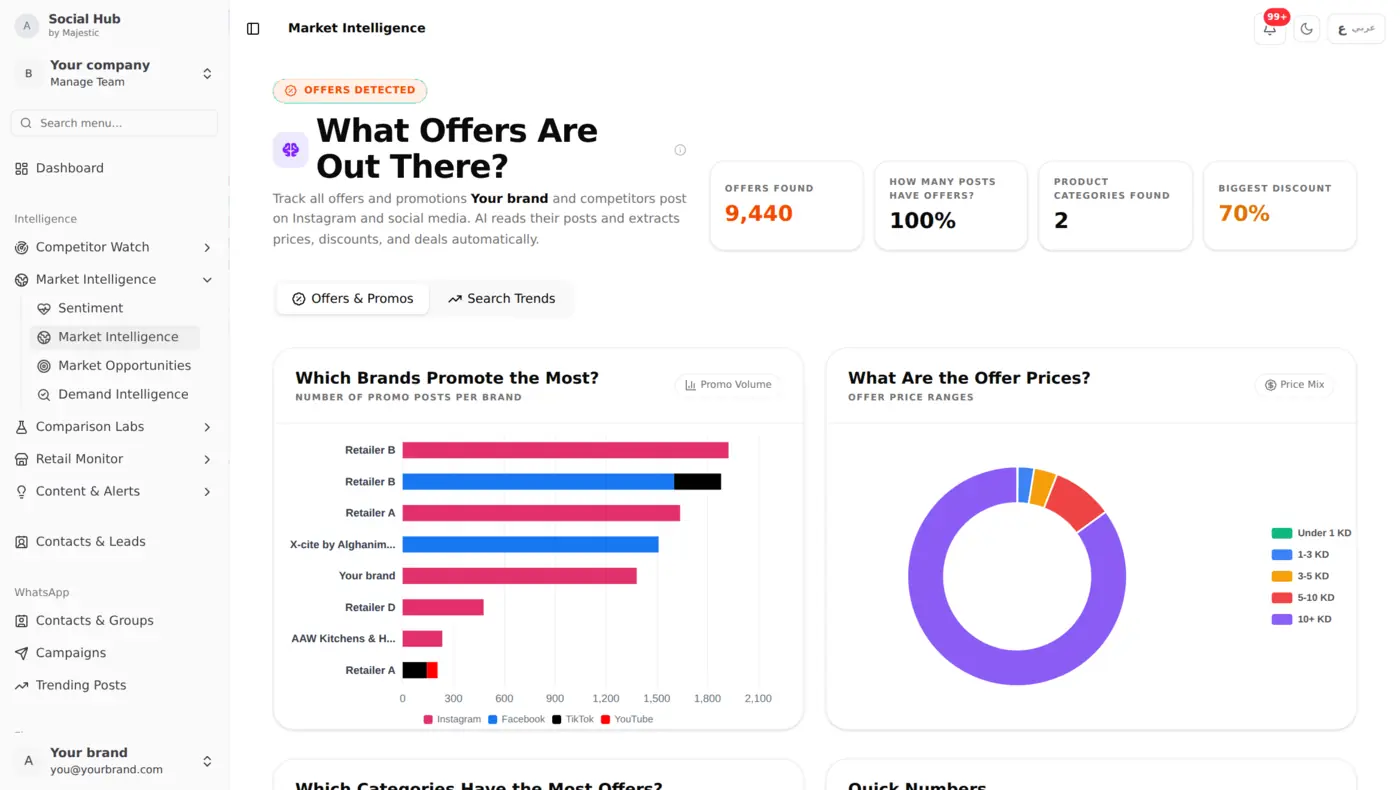
Why Arabic Sentiment Is Different
Arabic sentiment needs to understand dialect, slang and mixed language: especially in Gulf Arabic dialects. Here's why:
- Dialect variation: "حلو" means "sweet" in MSA but "nice/cool" in Kuwaiti context
- Sarcasm: "يا سلام عليهم" can be genuine praise or deep sarcasm, context matters
- Mixed language: "الservice حقهم terrible", Arabic-English code-switching everywhere
- Emoji as sentiment: 💀 doesn't mean death in Kuwaiti social media: it means something is hilarious
- Negation patterns: Arabic negation works differently than English and breaks simple rule-based systems
How Social Hub Handles Arabic Sentiment
AI-Native Analysis
We don't use translated English rules. Our AI is built to understand:
- Gulf Arabic dialects (Kuwaiti, Saudi, Emirati)
- Modern Social Arabic (internet slang, abbreviations)
- Arabic-English mixing (common in Kuwait)
- Context-dependent expressions
- Emoji usage in Arabic social contexts
Comment-Level Granularity
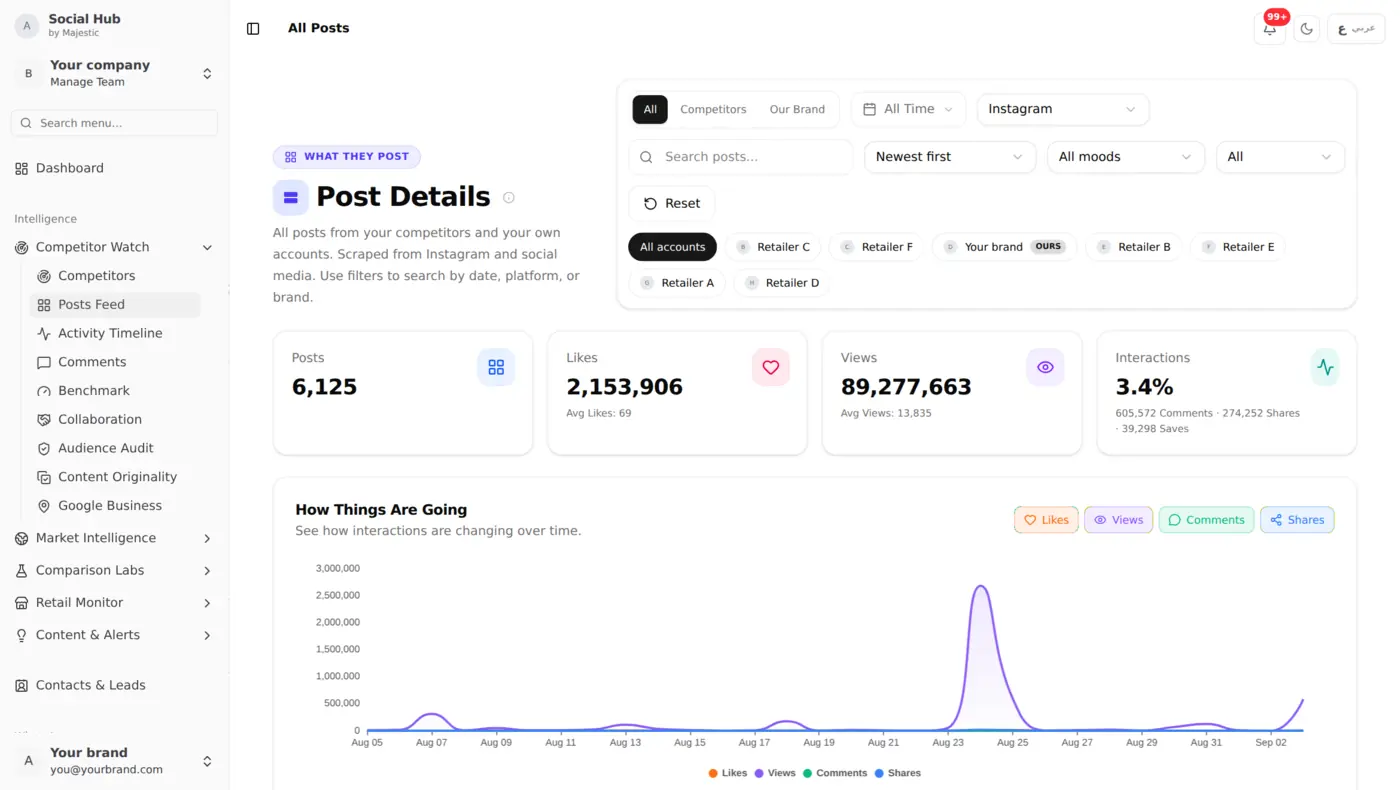
We don't just rate a post as positive/negative. Every individual comment is analyzed. Here's the Comments dashboard, with Arabic and English feedback side by side:
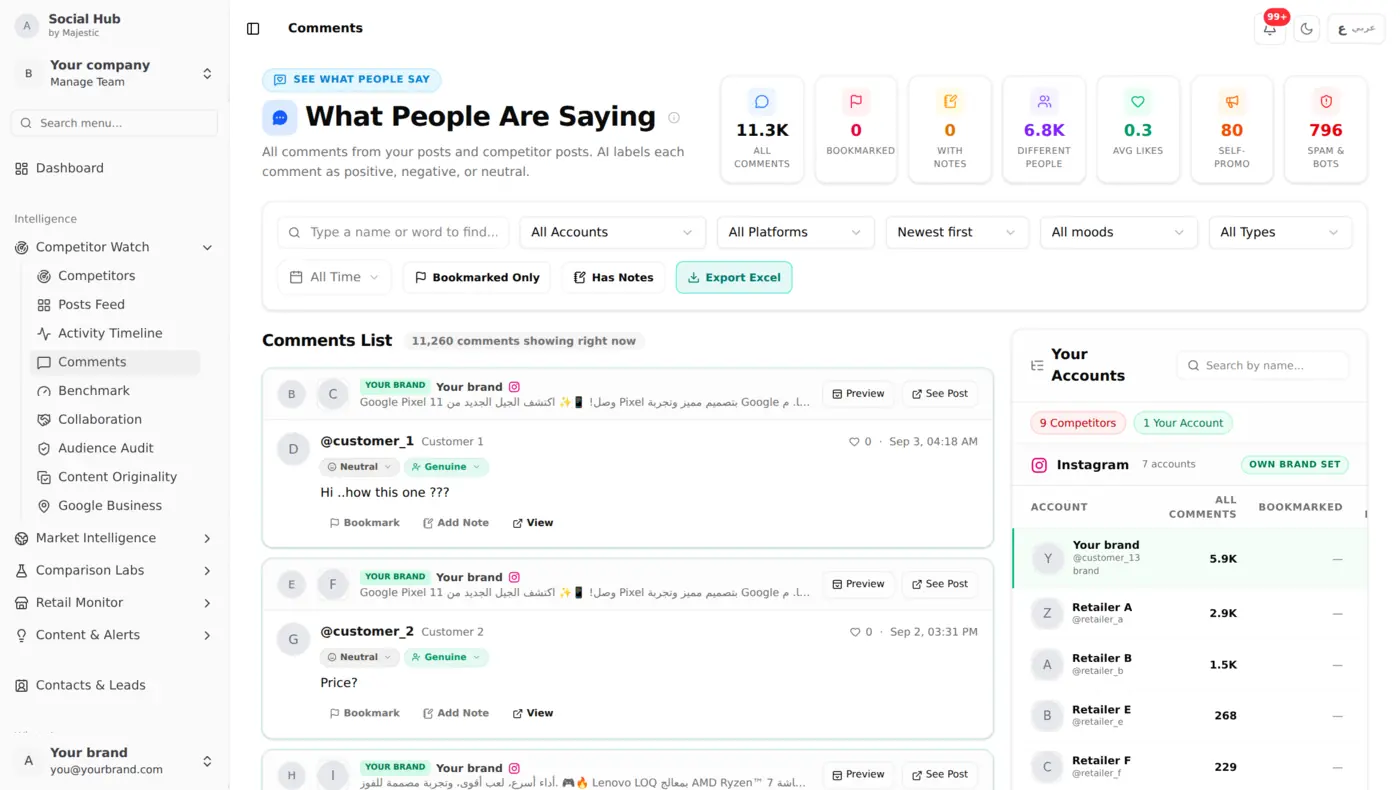
Each comment is scored for:
- Overall sentiment (positive, negative, neutral)
- Comment type (genuine, spam or bot)
Across each post, the AI also picks out purchase intent, price complaints and the top complaints. On your own Instagram and Facebook accounts, comments in the Community area are also sorted by intent: question, complaint, praise, lead, spam or other.
Topic Extraction
From thousands of comments, we extract themes:
- Complaints about slow delivery → operations issue
- Praise for product quality → marketing opportunity
- Complaints about price → pricing issue
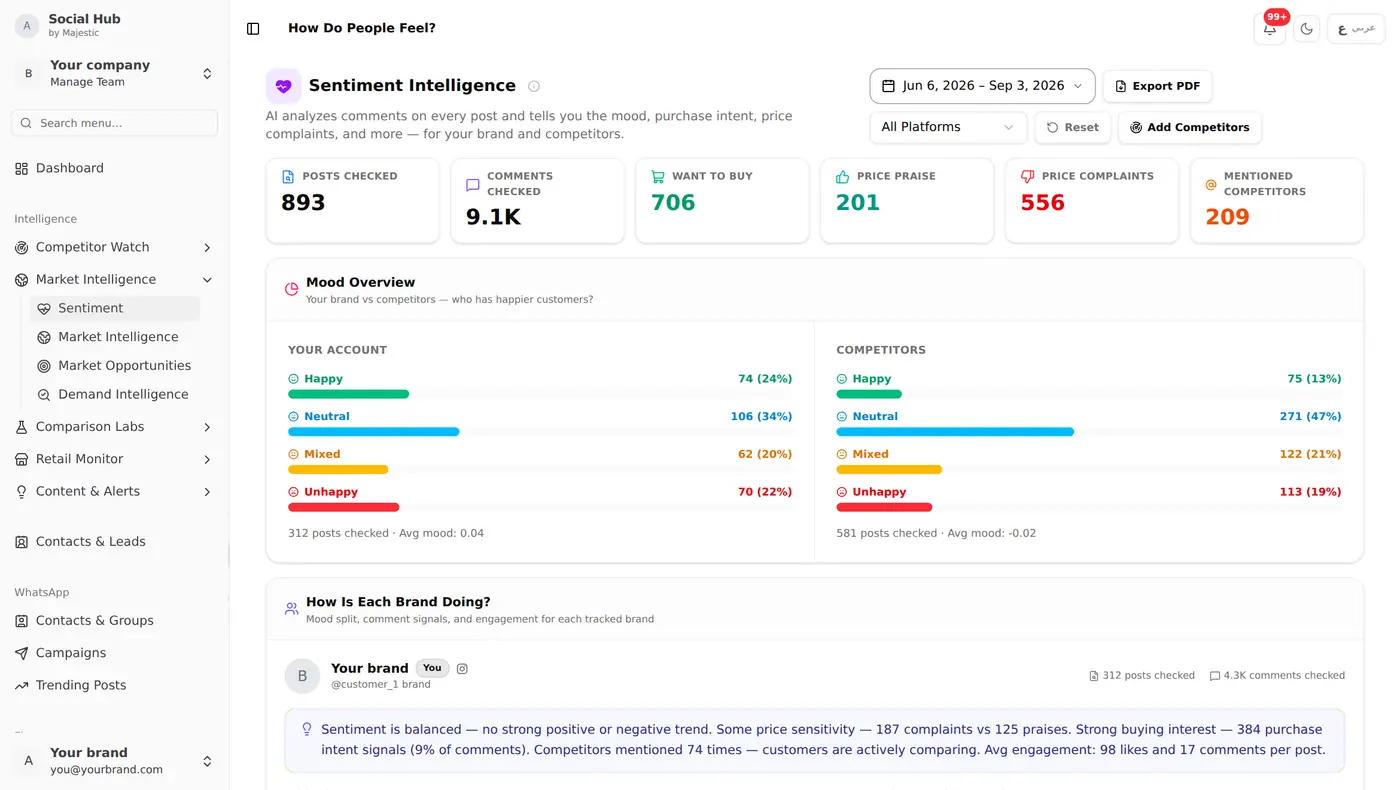
Sentiment Dashboard
The Sentiment Dashboard shows:
- Mood over time, is sentiment trending up or down?
- Mood by competitor, who has the happiest customers?
- Topic breakdown, what are people actually talking about?
Social Comparison Lab
Compare your brand's sentiment against competitors:
- Your mood split: positive, neutral, mixed and negative
- Each competitor's mood split, side by side (what are they doing right?)
- Where a competitor's customers are less happy (a chance to win them over)
Drill into the data: which topics drive the difference? Maybe Competitor A's delivery is loved but their prices are criticized.
What You Can Do With It
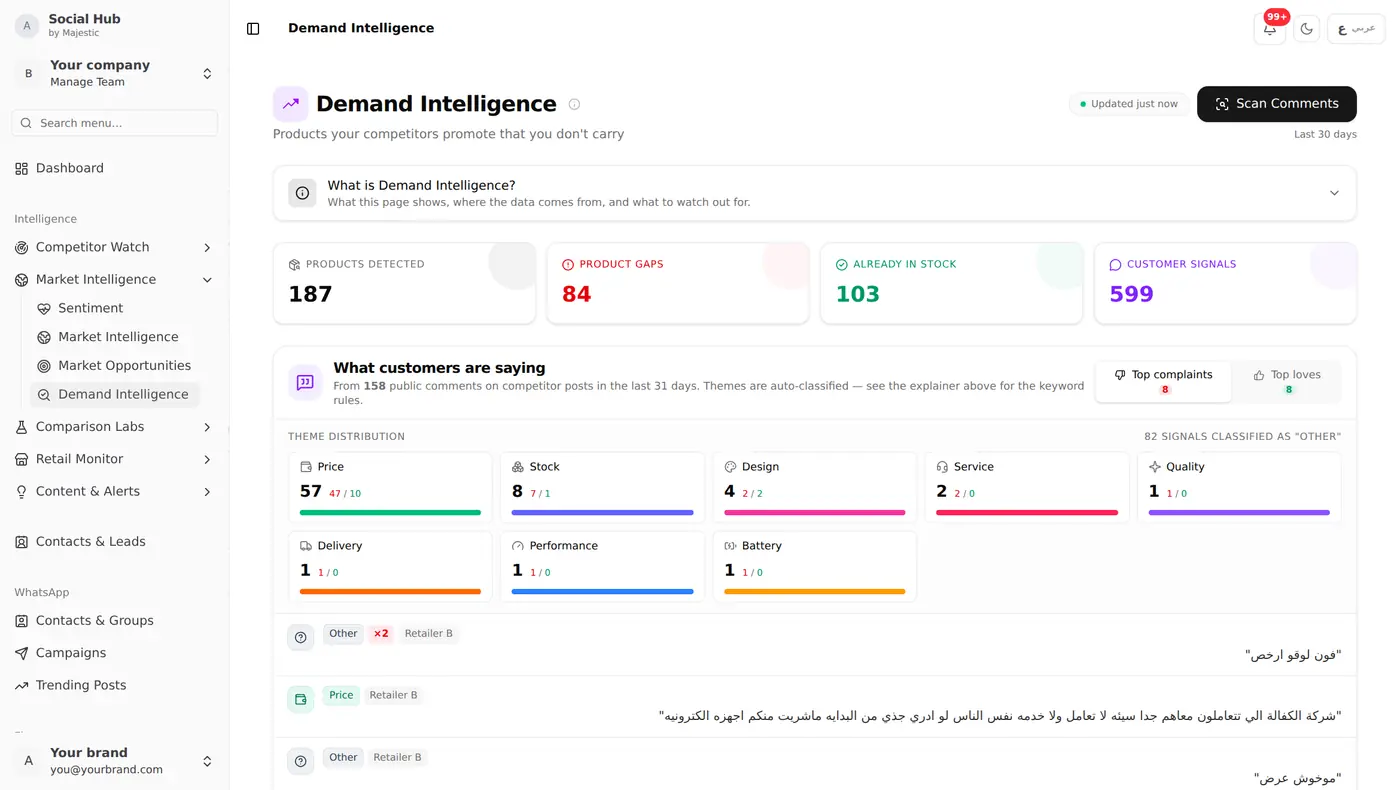
Track your competitors and the comments on their posts are read automatically. The Sentiment Dashboard surfaces their top complaints, so a recurring issue such as late or cold deliveries stands out without anyone reading every comment. You can then shape your own messaging around what customers say they're missing, and see how your own comments compare in Social Comparison Lab.
Getting Started
Sentiment analysis activates automatically when you track competitors. No configuration needed: just add competitors and start seeing sentiment data after the first daily collection.
For deeper analysis, explore:
- Comments page: browse individual comments with sentiment tags
- Sentiment Dashboard, big-picture trends
- Social Comparison Lab, head-to-head competitor mood analysis