Most restaurant owners check competitors the same way: someone sees a rival's post, forwards it to a group chat, and the conversation ends with "we should do something". A month later nobody remembers what was decided.
A short, fixed monthly review works better. Thirty minutes, the same five questions, one or two decisions at the end. This post gives you the routine and the decisions each question should lead to.
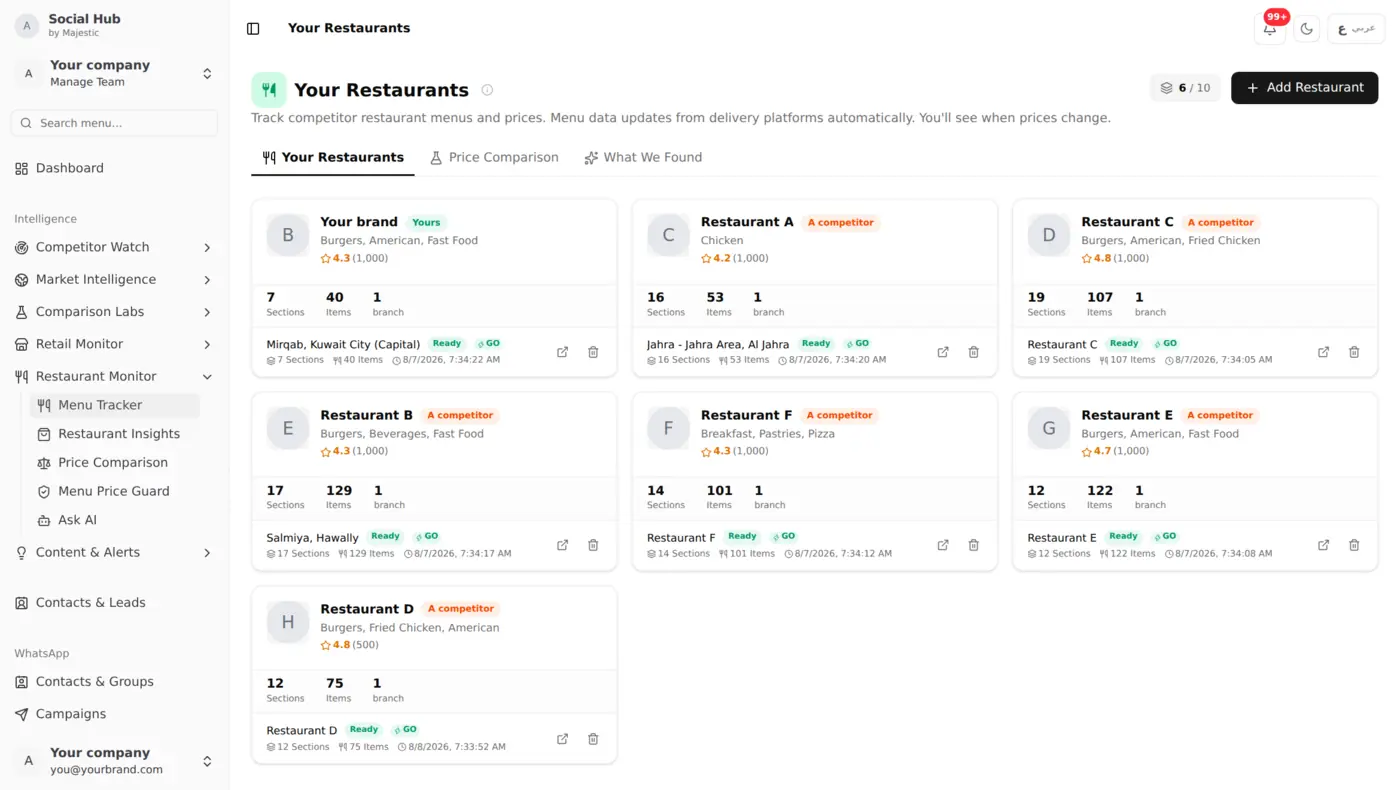
Setting up the tracking first? See how to monitor competitor menus on Talabat and the Restaurant Insights feature page.
Before you start: pick your three to five rivals
Not every restaurant in the area is a competitor. Choose the ones customers actually compare you with: same cuisine, similar price, overlapping delivery area. Three to five is enough. More than that and the review turns into reading.
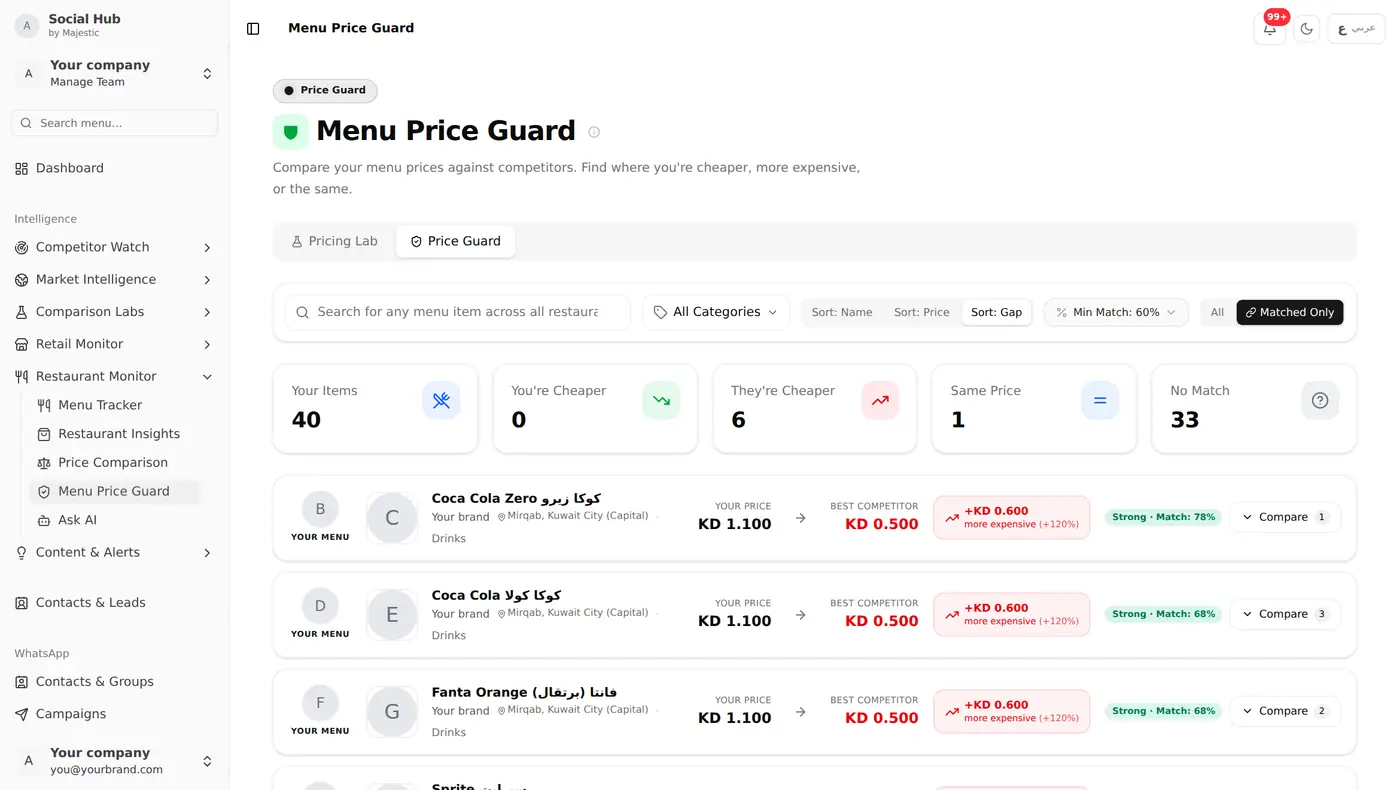
Question 1: Who moved their prices, and on what?
Open the menu price changes for the month. Look for:
- Increases on items you also sell. If two rivals raised their chicken burger by 250 fils and you didn't, you now have room, or an advantage to promote.
- Cuts on a single hero item. Often a sign of a push on one product, or of a weak month.
- Quiet increases spread across the whole menu. Usually cost pressure, and a hint your costs will follow.
Decision: hold, follow, or advertise the gap.
Question 2: What appeared or disappeared from their menus?
New items show what they are testing; removed items show what didn't sell.
- A new item followed a few days later by Instagram posts is a planned launch. Watch whether it stays next month.
- An item removed, then comments asking "where did it go?", is a dish customers liked. That may be a gap you can fill.
Decision: is there an item worth testing, or a gap worth filling?
Question 3: How hard are they promoting?
Look at the promotions picked up from their social posts:
- How many offers each rival ran this month
- Average and biggest discount
- Timing: weekends, paydays, Ramadan, National Day, summer
A rival running 25% off every weekend has trained customers to wait for Friday. A rival that never discounts is competing on something else.
The useful signal is the combination: a price increase on the delivery app alongside a "20% off" campaign on Instagram tells you more than either one alone.
Decision: do you need an offer this month, and when should it run?
Question 4: What are customers praising and complaining about?
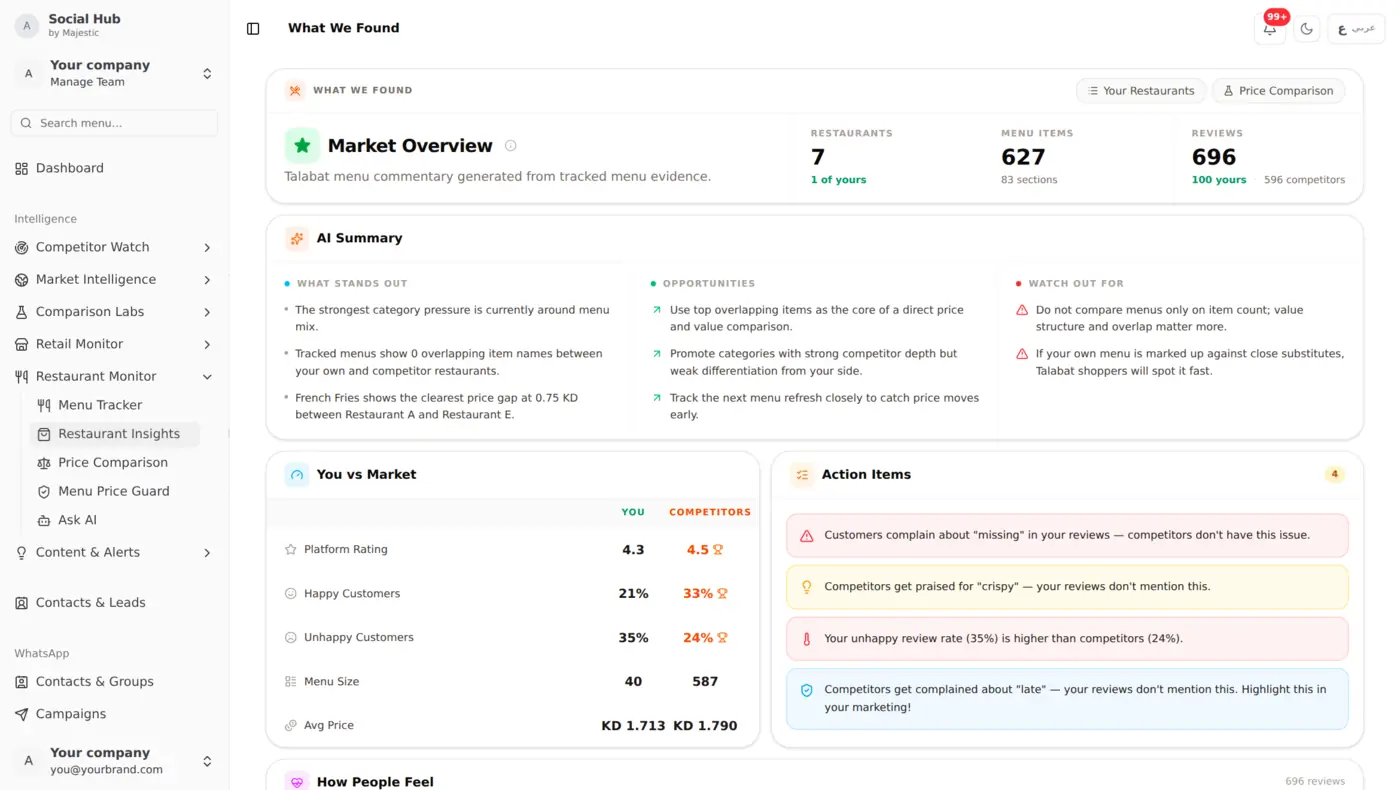
This is the question owners skip, and the one that matters most. Look at the happy and unhappy share of reviews for you and for each rival, and read the themes:
- A complaint that shows up in your reviews but not theirs (cold food, late delivery, small portions) is the first thing to fix.
- Praise they get that you could earn too (packaging, generous sides, fast replies) is a marketing angle.
- A rival's recurring complaint is a reason customers might switch. Make it easy for them to choose you.
Decision: one operational fix, one message for marketing.
Question 5: Where do you stand overall?
Finish with the "You vs Market" numbers:
- Platform rating vs the competitor average
- Share of happy and unhappy reviews
- Menu size vs the market average
- Average price vs the market
You do not need to win on all five. A premium brand can be more expensive than average with a higher rating. The point is to see whether the gap is moving the way you intend.
You can also ask the AI assistant directly, for example "Which competitor raised prices this month?" or "What do customers complain about at [competitor]?"
Decision: is your position moving in the direction you chose?
Write it down
End the review with three lines in a shared note:
- What changed in the market this month
- What we will do about it
- What we will check next month to see if it worked
Next month, start by reading last month's three lines.
Who this is for
- Single-brand restaurants watching three to five direct rivals
- F&B groups running the same review per brand
- Cloud kitchens, where delivery-app prices and ratings are the whole storefront
- Consultants preparing a monthly briefing for clients